
Between 5 and 7, a child can handle far more than we assume, as long as the chores fit: short, concrete, with a visible start and end. Here are ten chores that work at this age, and how to present them so they become missions rather than nagging.
The short answer: between ages 5 and 7, one or two short daily chores are enough, chosen for their visible start and end. Present them as missions, let the child validate them themselves, and never demand an adult’s result.
These ten chores are the 5-to-7 slice of our chore chart by age, which covers ages 3 to 14. To put them into practice right away, build your own schedule with our free chore chart generator and print it in a minute.
The 10 chores that work for ages 5 to 7
- Put away toys. The classic, as long as you’re specific: “Lego in the yellow bin” can be finished, “clean your room” discourages.
- Set the table. Plates, cutlery, glasses: a real role at mealtime, visible to the whole family.
- Water the plants. Daily, short, satisfying: the child watches the result grow.
- Feed the pet. Caring for a living thing gives it meaning; help with the amounts at first.
- Make their bed. The gesture that opens the day. Perfect as a first step in the daily routine.
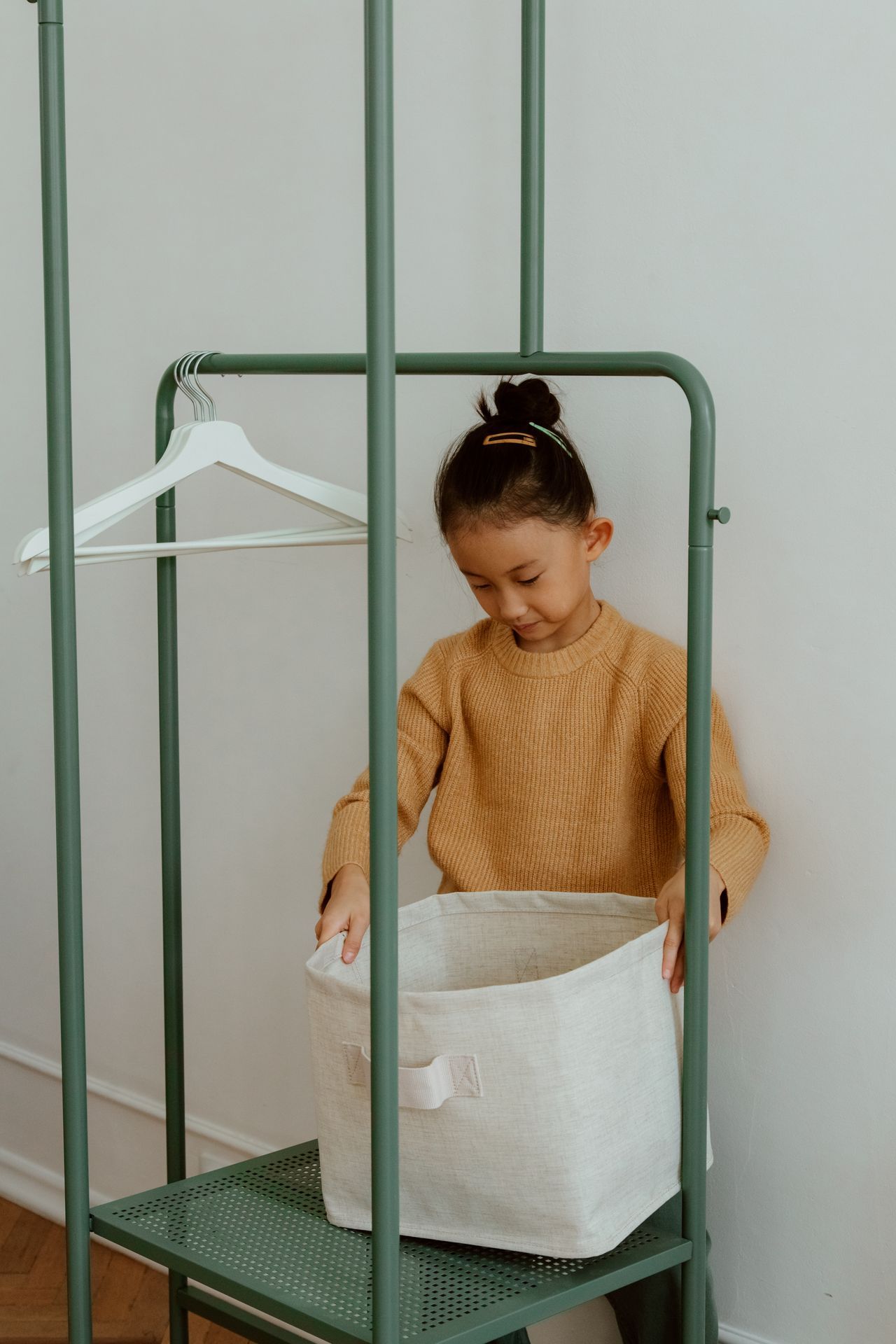
- Put laundry in the basket. The ultimate micro-task: zero skill required, full independence.
- Clear their own plate. Their own place setting, not the whole table: the task stays their size.
- Fold towels and napkins. Simple folding is doable from age 5, and kids love making neat stacks.
- Lay out clothes for tomorrow. Done in the evening, it spares the morning one negotiation.
- Wipe the table after the meal. Visible start and end, immediate result, sponge their size.
How to present them so they want to help
The stakes go beyond tonight’s helping hand: Marty Rossmann’s longitudinal study (University of Minnesota, 2002) found that taking part in household tasks from age 3 or 4 is one of the best predictors of success in early adulthood. But the child still has to want to do it again tomorrow. At this age, everything runs on play and pride. Three levers:
- A mission, not a chore. The same task changes nature depending on the word you put on it.
- Choice within a frame. “Would you rather set the table or water the plants?” works better than assigning.
- Visible validation. Checking a box, sticking a sticker, validating in an app: the closing gesture belongs to the child and feeds their pride.
That’s exactly how Harmonia works: chores become missions, each validated mission earns points, and points unlock rewards chosen as a family. Discover the app, free and complete for one parent and one child.

How many chores by exact age
| Age | Daily chores | What changes |
|---|---|---|
| 5 | 1 short task | You install the habit, with an adult nearby |
| 6 | 1 to 2 tasks | The child does it alone, the parent checks without redoing |
| 7 | 2 tasks | The child runs their mini-routine without constant reminders |
The classic pitfalls to avoid
- Starting with five chores. Just one, settled over two weeks, then the next.
- Paying for every gesture. At 5, pride is plenty; save rewards for consistency, not for the single task.
- Demanding an adult’s result. The goal is that they start again tomorrow, not that it’s perfect tonight.
In short: pick one or two chores from the list, turn them into missions with a clear start and end, and let pride do the work. For what comes next, the full chart by age gives you the progression up to 14.
Frequently asked questions
How many chores should a 5 to 7 year old have?
One or two short daily tasks are plenty. At this age the goal is the habit of contributing, not real help. Install one chore, then add the next.
My 6 year old does their chores badly, should I redo them?
No, never in front of them. A bed made by a 6 year old looks like a bed made by a 6 year old. If the result falls short, show again once, calmly, but don’t redo it: redoing behind them is the most discouraging message there is.