Why coming home from school needs more than one step
After school, a child may need to enter the house, put belongings in place, recover from the school day, begin homework, and contribute to family life. These steps may happen close together, but they do not demand the same kind of attention or support.
A broad instruction such as “do your routine” leaves the child to work out what comes first, where the task belongs, and whether there is time to rest. The parent then fills in the gaps with reminders. Each reminder may be reasonable on its own, yet the sequence can quickly become a running conversation that neither side wants.
A better approach is to create a flexible return-home sequence. It gives the child a visible point of reference while allowing the order to change when homework, tiredness, transport, or an activity changes the afternoon. The sequence is a guide for the day, not a timetable that has to look identical every time.
A flexible after-school sequence separates the main needs that occur between arrival and evening.
| Stage | Purpose | Possible prompt |
|---|---|---|
| Arrival | Enter and put belongings in place | Bag on the hook |
| Recovery | Pause, eat, drink, or reconnect | Snack at the table |
| Homework | Complete the school-related work | Open the homework folder |
| Free time | Relax or play when appropriate | Choose a quiet activity |
| Contribution | Complete one household responsibility | Put dishes in the dishwasher |
Which chore should come first after school? Start with what already needs to happen
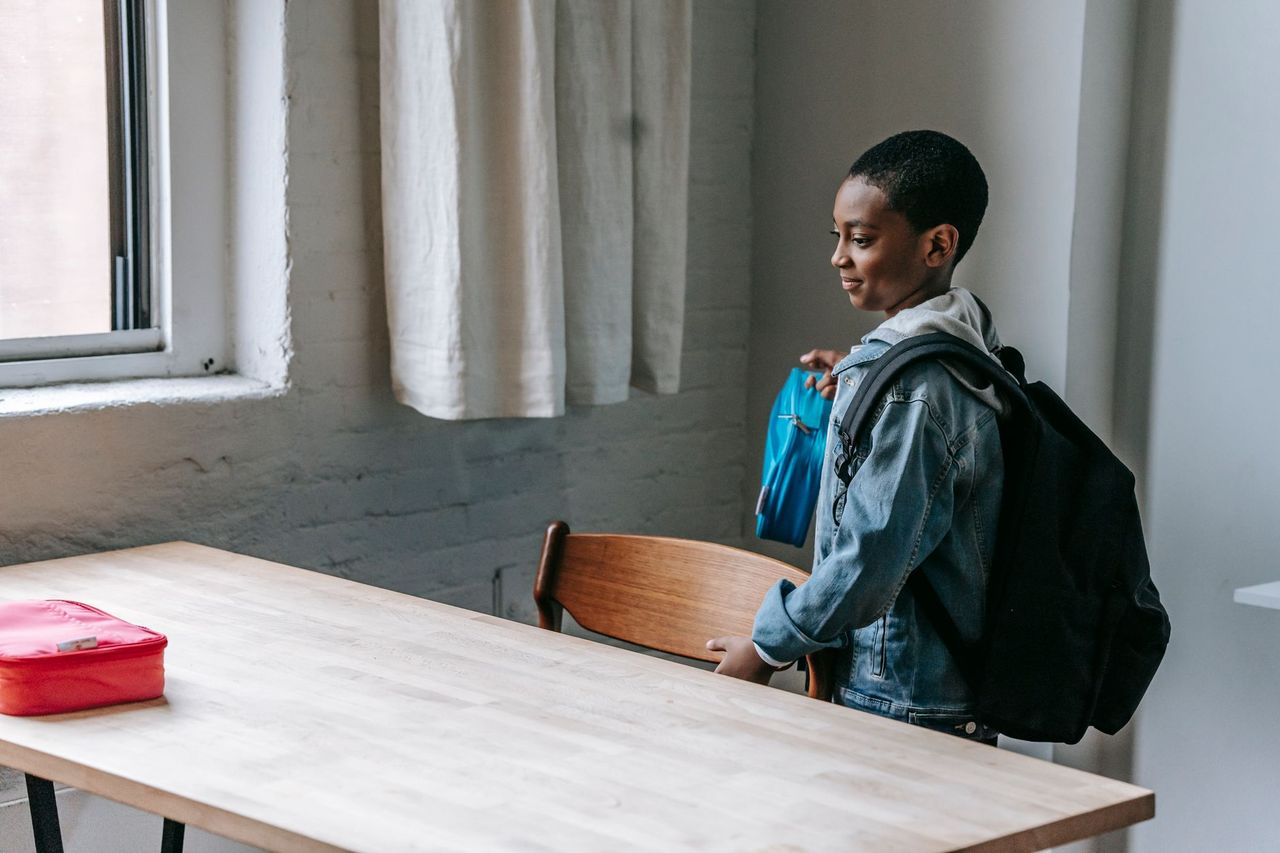
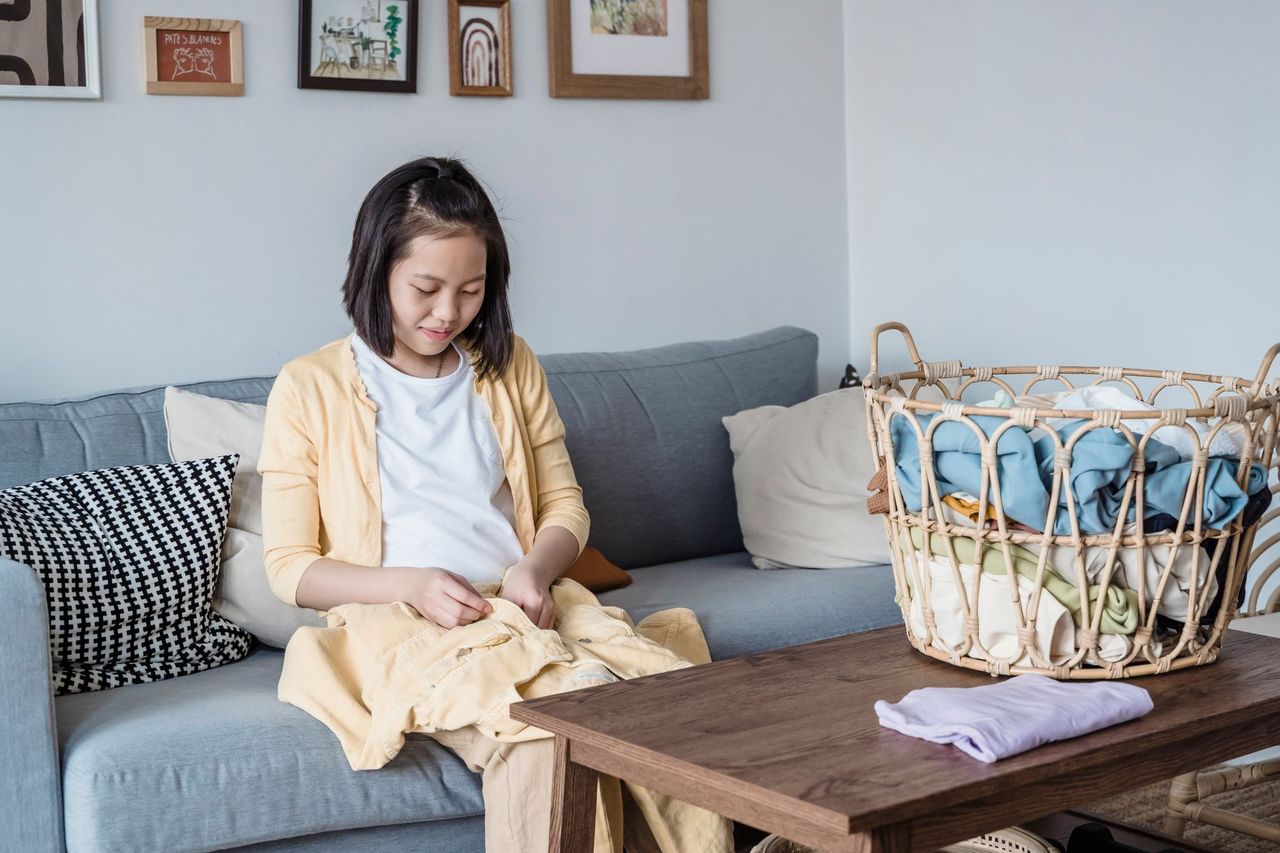
The first task is usually easiest to establish when it is attached to something the child has already done. Emptying a lunchbox, placing a schoolbag in its usual location, hanging up a coat, or putting school clothes in the laundry basket can all make sense immediately after arrival. These actions are often more accessible than asking for a general room tidy-up.
Choose the task according to the child’s observed independence rather than a fixed age chart. One child may manage a short sequence alone, while another may still need the materials prepared or the location clearly marked. The useful question is whether the child can understand the action and begin it with the support currently available.
For ideas that take a child’s development into account without turning responsibilities into a strict ranking, see Chore Chart by Age, 3 to 14 (+ Free Printable). The after-school task can be one item from a broader family system, but it does not have to carry the whole household workload.
Temporarily set aside tasks that require lengthy preparation, sustained concentration, or a fresh negotiation every afternoon. A chore involving several rooms may be suitable at the weekend or during a planned family contribution period. It may be a poor fit immediately after a demanding school day.
Build branches for different kinds of school days
A single after-school routine often becomes fragile when every day is expected to follow the same order. Instead, prepare a few simple versions. A quiet day may allow arrival, a short recovery period, homework, a household task, and free time. On a day with an activity, the task may need to happen before leaving, after returning, or at another point in the day.
When the child is clearly tired, use an abbreviated version. The arrival task may be enough, followed by food, rest, and the most urgent school responsibility. A longer chore can move to the next suitable moment. Moving it is a planning decision, not proof that the routine has failed.
These examples show how the order of homework, recovery, and chores can change with the afternoon.
| Day | Suggested sequence | Task approach |
|---|---|---|
| No activity | Arrive, recover, homework, chore, free time | Use one short regular task |
| Activity later | Arrive, arrival task, snack, activity, homework | Move the longer task elsewhere |
| Very tired | Arrive, food, rest, essential homework | Keep only the minimum contribution |
| Homework-heavy | Arrive, arrival task, recovery, homework | Schedule the chore at another time |
The order between homework and chores should reflect the child’s condition. Some children concentrate better after a short transition and can complete a small task before studying. Others need to begin homework while their attention is still available. Guidance on making that transition calmer is available in Stop Homework Battles: Where to Start.
How many chores should a child do after school?
Begin with the smallest contribution that makes the next part of the afternoon easier. In many homes, that means one arrival task rather than a complete list of household responsibilities. Once the action is understood, visible, and compatible with the child’s remaining energy, another responsibility may be added or assigned at a different time.
There is no universal number that suits every child or every school day. The appropriate amount depends on the child’s independence, homework demands, travel time, activities, and current energy. A task that is manageable on a calm afternoon may be excessive before music practice, sports, or an appointment.
It also helps to distinguish between an arrival task and a regular responsibility. Putting the lunchbox in the kitchen belongs naturally to the return-home sequence. Folding laundry or cleaning a shared space may belong in a weekly rotation, a weekend plan, or another predictable point in the day. A Weekly Chore Schedule: Making It Last Past Week Two can help separate these layers without adding every responsibility to the after-school transition.
- Start with one task that is short and directly connected to arriving home.
- Add another task only when the first one is clear and sustainable.
- Move longer responsibilities when homework, activities, or fatigue make the afternoon too full.
- Review the whole day before deciding whether a chore belongs after school.
Make one next action visible
A visible prompt works best when it names one action with a concrete verb and a clear location. “Put the lunchbox in the kitchen” gives more useful information than “sort your things.” “Hang your coat on the hook” is easier to act on than “tidy the hallway.”
Place the prompt where the action happens: beside the entrance, near the schoolbag, or above the laundry basket. It can be a small card, a simple printed strip, or one line on a routine chart already used by the family. A simple card or existing chart is enough.
Show only the next action at the point of transition. Displaying the entire chain at once may make the afternoon feel like a long assignment. Once the first step is complete, the child can be directed to the next visible step, or it can be revealed then.
This approach gradually shifts the reminder from the parent’s voice to the environment. It does not mean removing help abruptly. If the child stops because the instruction is unclear, the material is missing, or the task has become too demanding, adjust the wording or provide the necessary support. Teaching Kids Responsibility: Hand Over the Reminder explores this transfer in more detail.

A visible next step can also reduce the mental load involved in remembering, repeating, and checking every instruction. For a broader look at sharing responsibility at home, read Family Mental Load: How to Share Responsibility at Home.
Test the routine tonight and adjust without blame
Treat the first version as a small test. Notice where the sequence stops: at the door, during recovery, before homework, during the chore, or when moving toward free time. The location of the difficulty tells you more than a general conclusion that the routine “does not work.”
Change one variable at a time. You might move the prompt, shorten the wording, provide a basket, change the chore’s position, or allow a longer recovery period. Changing several parts at once makes it difficult to know which adjustment helped.
A brief family review can keep the routine practical. Ask whether the action was clear, whether the location made sense, and whether the timing fitted the day. Keep the discussion focused on access and design rather than effort or character.
Maintain a minimum version for difficult days. This might mean putting the bag away and leaving the remaining tasks for another time. A routine that has a smaller branch is more adaptable than one that only works when the afternoon is calm.
Key takeaways for an after-school chore routine
- Separate arrival, recovery, homework, free time, and household contribution before deciding on the sequence.
- Choose a first chore that is connected to what the child is already doing, such as emptying a lunchbox or hanging up a coat.
- Show one concrete next action in the place where it needs to happen.
- Adapt the order and the amount of responsibility to the day’s activities, homework, and energy.
- Keep a minimum version for tiring days and move longer chores to a more suitable time.
Frequently asked questions
What chore should I offer first after school?
Start with a short task linked directly to arrival, such as putting the schoolbag away, emptying the lunchbox, or placing clothes in the laundry basket. Choose an action the child can understand with the support currently available.
Should the chore happen before or after homework?
Use the child’s energy and concentration as the guide. A short arrival task may come before homework, while a longer responsibility can wait until later. On a homework-heavy day, move the chore to another planned time rather than forcing the same order.
How many chores should a child do after school?
There is no universal number. Begin with one clear, manageable contribution and add another only when it remains compatible with homework, activities, recovery, and the child’s independence.
What should I do when my child is too tired after school?
Use the minimum version of the routine: complete one essential arrival action, allow food or rest, and address urgent homework if needed. Longer chores can be moved to another point in the day.
How can I display one next action without creating a complicated chart?
Write one concrete sentence with a verb and a location, such as “Put your lunchbox in the kitchen.” Place it beside the entrance, schoolbag, or relevant basket. A card or single line on an existing chart is enough.
Should the routine be the same on days with extracurricular activities?
It can keep the same basic structure while using a different branch. The arrival task may stay consistent, but homework, recovery, and longer chores can move around the activity or be scheduled for another time.