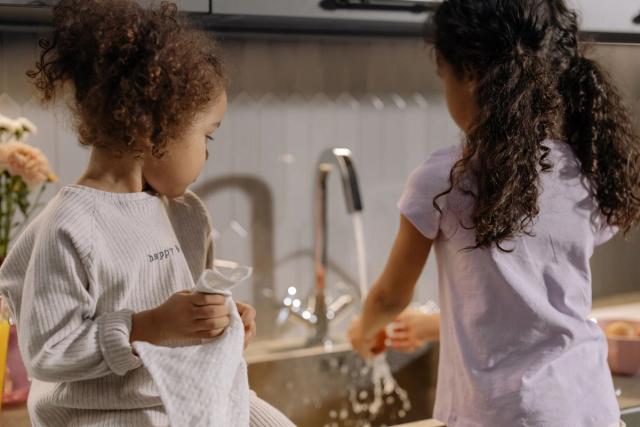
Start by understanding what is blocking the chore
A child who says “no” may be refusing, but refusal is not the only possible explanation. The task may have been forgotten, the child may be tired, the first step may be unclear, or the transition away from a favourite activity may feel abrupt. A chore can also be harder than it looks: putting away clothes involves sorting, deciding where items belong and staying with the task until the floor is clear.
Observe what happens immediately after you give the instruction. Does your child look confused, keep playing, argue about fairness, wander away or start but lose track of the next step? Each response may point to a different friction point. A vague request such as “Be helpful” requires the child to work out what to do. A long list given while the child is absorbed in a game makes starting more difficult. A task that takes too long may produce avoidance even when the child understands the request.
Use the child’s immediate response to identify the first obstacle to reduce.
| What you see | Possible obstacle | First adjustment |
|---|---|---|
| “What do I do?” | Unclear instruction | Name one visible action |
| Keeps playing | Difficult transition | Give a brief warning, then ask |
| Starts and wanders off | Task is too long or open-ended | Define a smaller finish line |
| Argues about every detail | Need for control or uncertainty | Offer two acceptable choices |
| Becomes upset quickly | Fatigue or excessive difficulty | Reduce the load and stay nearby |
Choose one obstacle to address first. Changing the wording, timing, consequence and household system all at once can make it difficult to see what actually helps. For broader guidance on gradually transferring reminders to your child, see Teaching Kids Responsibility: Hand Over the Reminder.
Give an instruction that makes starting possible
A useful chore instruction describes an action that you can see and check. “Put the dirty clothes in the hamper” is easier to follow than “Tidy your room.” For a younger child, the first request might be even narrower: “Put the books on this shelf.” For an older child, you can name a larger but still observable result, such as “Clear the dishes from the table and place them by the sink.”
Limit the first step and make the finish line explicit. If the entire chore feels too large, begin with “Pick up the shoes by the door.” Once that is complete, give the next instruction if one is still needed. This prevents a child from having to hold a long sequence in mind before taking action.
Use a neutral tone and pause. Say the request once, allow a short moment for your child to process it, and avoid filling the silence with several reminders. You can then offer a brief prompt such as, “Start with the plates.” Repeating the same instruction louder can turn the chore into a contest about volume rather than an opportunity to practise responsibility.
Offer choice without giving up responsibility
Limited choice can give a child a sense of control without making participation optional. Offer two options that you are genuinely prepared to accept: “Would you put away the cutlery or wipe the table?” You might also offer two nearby times: “Would you do it before your bath or just after?” The choice should change how the responsibility is carried out, not whether it exists.
Keep the options concrete and relatively close in effort. A choice between a small, familiar task and a much larger one may feel unfair. For the same chore, method-based choices can work well: “Would you carry the cups one at a time or use the tray?” The adult still sets the boundary, and the child chooses within it.
When your child says, “I don’t want to,” avoid opening a long discussion in the moment. A consistent response might be: “You do not have to like it. You do need to choose: the table or the cutlery.” If the child still refuses, state the practical next step calmly: “The chore will be done before the next activity.” Keep the wording short enough to repeat without sounding threatening.
- Choose between two chores: “The recycling or the shoes?”
- Choose between two nearby times: “Before the story or after the story?”
- Choose between two suitable methods: “With the cloth or the small brush?”
- Keep the decision about how or when, not whether the child participates.
Help with the start, then hand the task back
Some children do not need a lesson about responsibility; they need help overcoming the gap between hearing a request and taking the first action. If inertia is the main problem, stand near your child and begin the first movement together. You might open the drawer, hold the bin steady or place the first item in the basket. Then say, “You continue with the next one,” and move back.
The aim is to support initiation, not to supervise every second. Use one verbal or visual reminder, then reduce your involvement. If your child pauses, point to the remaining items rather than immediately taking over. A small pause can allow the child to recover the sequence and continue independently.
Avoid correcting every detail while the chore is in progress. If the shirts are folded unevenly but are safely put away, the immediate goal may already have been met. Save a teaching point for another calm moment, and address only what matters for safety, hygiene or the agreed finish line. Doing the chore again in front of the child can unintentionally teach that effort will be replaced by adult perfection.
Make the chore easier to continue
Look at the physical setup before concluding that your child is uncooperative. If the laundry basket is difficult to carry, the cleaning cloths are hidden or the storage space is crowded, the task contains unnecessary friction. Put the required materials where the action takes place and make the destination visible. A child cannot easily follow “put everything away” if there is no clear place for everything.
Connect the chore to a part of the day that already happens, such as clearing the breakfast place before leaving or putting toys away before the evening story. This does not require a complicated new routine. A stable cue can reduce the need for a fresh negotiation each time. If you are planning the frequency and timing of responsibilities, Weekly Chore Schedule: Making It Last Past Week Two can help with that separate preparation.
Adjust the amount of work to the child’s age, attention and current capacity. A younger child may sort socks or carry napkins, while an older child can manage a complete household task with a defined result. The task should be one the child can understand, perform safely and stay with for a reasonable period. When it is consistently unfinished, reduce its size before increasing reminders.
Adapt the instruction and finish line to the child’s current ability.
| Task design | Younger or less experienced child | Older or more experienced child |
|---|---|---|
| Laundry | Put clothes in the hamper | Sort and start the agreed load |
| After meals | Carry one item to the counter | Clear the place and load suitable dishes |
| Room reset | Put books in one place | Return several categories of items |
| Pet care | Fill a measured bowl with help | Complete the agreed feeding steps |
For examples of responsibilities that can suit different stages, explore Chore Chart by Age, 3 to 14 (+ Free Printable). The key is still to translate any broad responsibility into one instruction your child can act on at that moment.
Respond calmly to refusal, forgetting and unfinished work
When a chore is refused, describe the situation without labelling the child. “The dishes are still on the table” is more useful than “You are being lazy.” Repeat the agreed boundary and apply the practical consequence that belongs to the moment, such as completing the chore before moving to the next preferred activity. The consequence should be predictable and related to the unfinished responsibility, not humiliating or excessive.
Forgetting calls for a prompt and, later, a review of the system. You can say, “The recycling was due before we left. Please take it now.” If the same problem happens repeatedly, discuss when the reminder should occur or where the materials should be placed once everyone is calm. A single request may be enough for a familiar task, but support can be reduced gradually rather than withdrawn all at once.
If the work is incomplete, point to the remaining part: “The floor is clear except for the blocks.” Avoid turning the correction into a judgement about effort or character. When a child appears to do the chore badly on purpose, first check whether the task is unclear, too difficult or connected to a conflict. If the child can do it and is testing the boundary, calmly require the agreed standard and avoid a prolonged argument.
Recognise a precise behaviour: “You started when I asked,” “You kept going after the first pause,” or “You put each item in the right place.” Encouragement can support the process without becoming payment for every action. If you want to consider non-monetary encouragement separately, see Non-Monetary Rewards for Kids: A Simple Chore System.
Key takeaways for tonight
- Give one observable instruction and define what finished looks like.
- Offer two acceptable choices about the task, timing or method.
- Stay close for the first action when starting is difficult, then step back.
- Prepare the space and shorten the task if the child regularly loses track.
- Respond to refusal or incomplete work with a brief, stable and practical boundary.
Frequently asked questions
How can I motivate a child who always says no to chores?
First identify what happens after the request: confusion, transition difficulty, fatigue, avoidance or a genuine boundary test. Give one small, visible instruction, offer two acceptable choices and use a short response such as, “You can choose the table or the cutlery.” If refusal continues, keep the practical boundary stable and discuss the pattern later, when the emotion has settled.
What should I do if my child starts the task and then abandons it?
Check whether the chore is too long, open-ended or difficult to sequence. Point out the next visible step rather than repeating the whole request: “The books are left; put them on this shelf.” You can return briefly to help restart the action, then step away again. If this happens often, reduce the finish line or improve the storage and materials.
Should I stay with my child while they do a chore?
Stay nearby when starting is the main obstacle, especially for a young or inexperienced child. Help with the first movement, give one prompt and gradually reduce your presence. Remaining throughout every chore is not necessary, but expecting complete independence before the child is ready can create repeated conflict. The aim is a gradual handover.
How do I give a choice without letting my child decide whether to participate?
Offer choices only within the responsibility you have already set. “The chore is happening; would you do it before or after your bath?” preserves participation while allowing some control. Do not present “Do you want to do it?” as the choice if the task is required. Keep both options acceptable and avoid adding more alternatives once the child begins negotiating.
How should I react when a chore is done badly on purpose?
Describe the part that does not meet the agreed finish line and ask for that part to be corrected calmly. Before assuming deliberate sabotage, check whether the child understands the standard and can physically manage the task. Avoid redoing everything immediately or humiliating the child. A short, consistent expectation is more useful than a long accusation.
At what age can a child do a chore without a reminder?
There is no single age at which every child will manage every chore independently. Independence depends on the child’s experience, attention, the complexity of the task and how accessible the materials are. Start with a familiar, clearly defined responsibility and reduce reminders gradually as the child shows they can begin and finish it. Independence is built through repeated handovers, not assumed from a birthday.