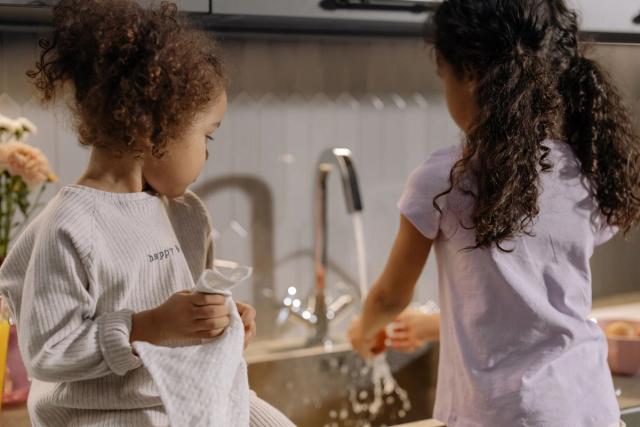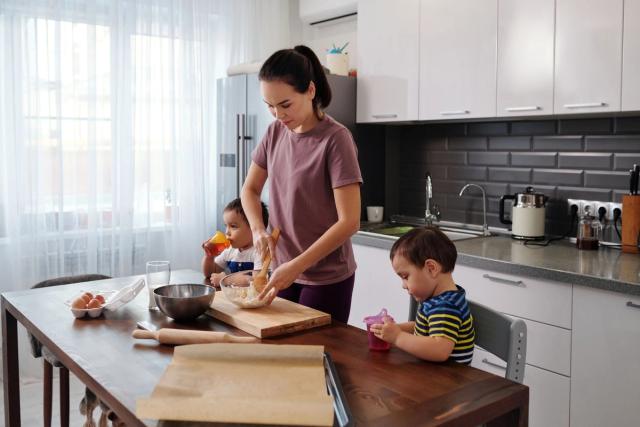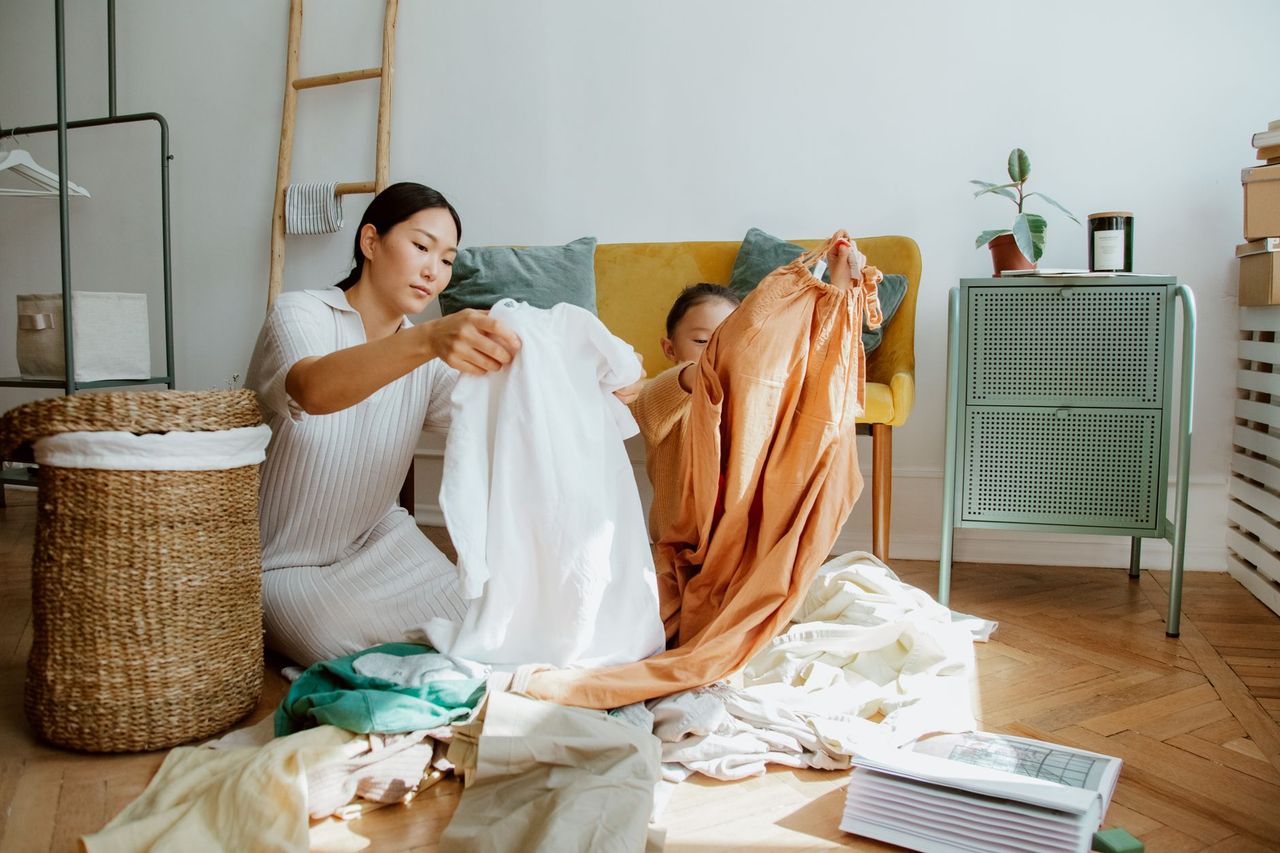
A tween is ready for more than occasional helping, but still needs a structure that makes success possible. A useful chore is repeated often enough to become familiar, clear enough to observe and flexible enough to adjust when school, tiredness or family circumstances change. The aim is to transfer responsibility gradually, not to hand over every household task at once.
If you are reviewing the whole childhood progression, the chore chart by age from 3 to 14 can help place the 8-to-12 age range alongside earlier and later responsibilities. For comparison with younger children, see 10 chores for 5 to 7 year olds.
What chores for tweens should include
For ages 8 to 12, a chore is best understood as a concrete responsibility that happens repeatedly and has a visible result. “Keep your room nice” is difficult to act on because the expected result is unclear. “Put dirty clothes in the hamper, return books to the shelf and clear the floor before dinner” gives the child a defined finish line.
Responsibilities usually develop in stages. An execution task involves carrying out a familiar action, such as putting away folded clothes. A preparation task adds the need to collect what is needed, such as finding a cloth and a safe cleaner before wiping a table. A responsibility managed over time includes noticing when the task is due, completing it, checking the result and reporting a problem.
Age provides a starting point, not a guarantee of readiness. Consider hand strength, coordination, reading ability, attention span, sensory needs, the layout of your home and the safety of the materials involved. A child may manage a detailed craft project but still need a visual checklist for a daily routine. Another may handle a larger physical task but need help remembering when to begin.
Chores by age: a practical starting table
This table compares suitable chore examples, usual support and safety limits for children aged 8 to 12.
| Age guide | Possible chores | Usual support | Safety limits |
|---|---|---|---|
| 8–9 | Unload safe dishes, fold laundry, pack a bag, wipe a small surface, tidy personal items | Demonstration, visual steps and light checking | No fragile or sharp items, strong cleaners, high places or unsupervised heat |
| 10–11 | Prepare a cold snack, sort laundry, empty a suitable bin, reset a shared room, sweep a small area | Brief reminder and final check | Use only approved products and equipment; supervise heat, blades and unfamiliar machines |
| 12 | Manage a simple laundry routine, prepare part of a cold meal, clean a shared area, maintain a regular household task | Occasional reminder, review and help with exceptions | Independence remains conditional on safe habits, equipment and home layout |
The table is a set of starting points rather than a test. A chore should be simplified if the child repeatedly misses key steps, becomes overwhelmed or uses equipment unsafely. It can be expanded when the child completes it reliably, notices what is needed and knows when to ask for help.
Chores that suit children aged 8 to 9
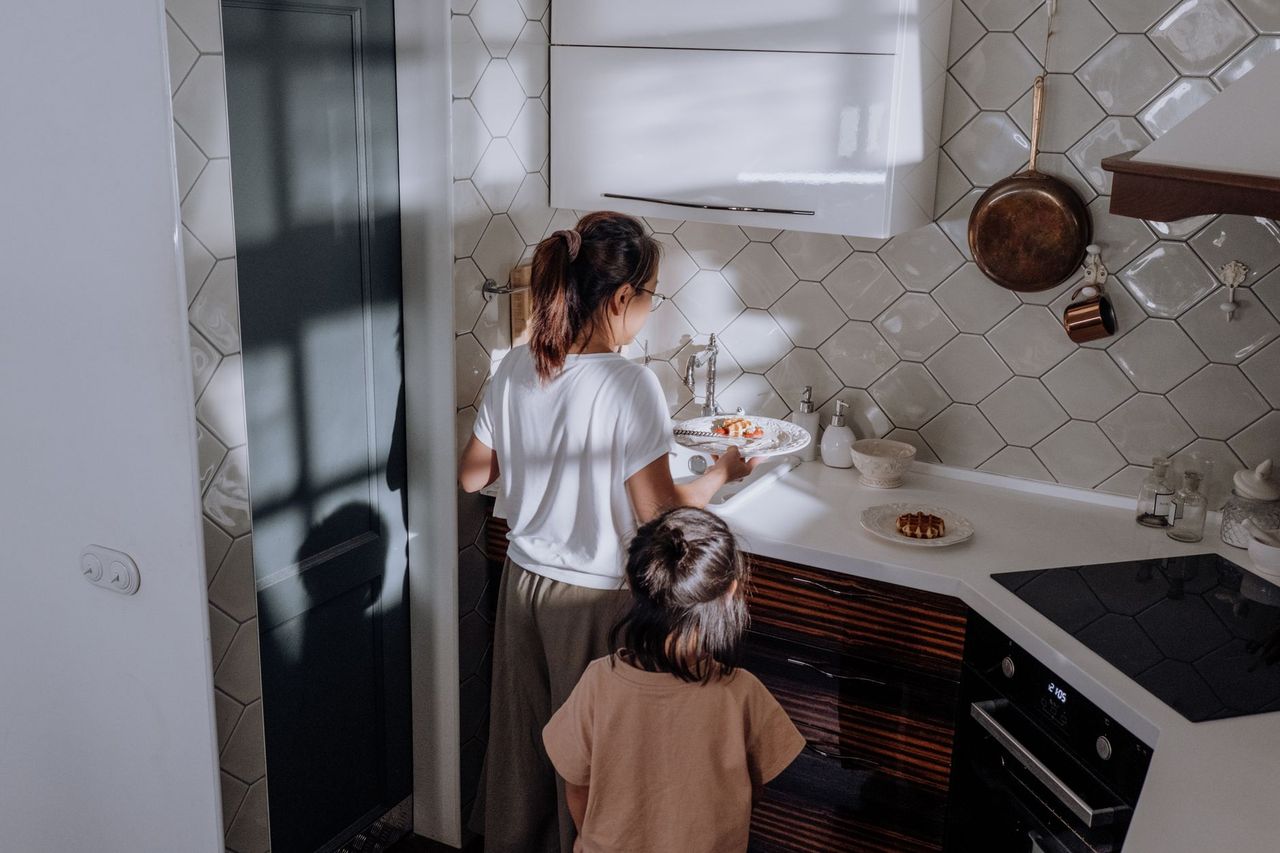
Children around 8 or 9 often benefit from responsibilities with a clear beginning and end. Suitable options include unloading non-fragile dishwasher items, pairing socks, folding towels, putting away their own clothes, preparing a school bag, feeding a pet with an agreed portion, wiping a low table or returning toys and books to their places.
When a task is new, make the sequence visible. For example, “collect the laundry, fold the clean items, put them in the right drawer and leave the basket by the machine” is easier to follow than “deal with the laundry.” Demonstrate the first attempt, then let the child perform the steps while you remain available. Repeating the task for them may be quicker, but it removes the practice that builds competence.
- Choose one regular personal chore and one contribution to the household.
- Use a short checklist, picture prompts or labelled storage when memory is the main difficulty.
- Check the result calmly and point to the next correction instead of silently redoing everything.
- Praise accurate effort and problem reporting, not only a perfectly finished result.
The checking stage should be simple. Look together at whether the surface is clear, the clothing is in the correct place or the bag contains the agreed items. If something was missed, describe the correction and allow the child to complete it. This keeps the focus on learning the responsibility rather than avoiding mistakes.
How responsibilities can grow from 10 to 12
Between 10 and 12, many children can move from isolated actions to small responsibilities that include preparation, execution and cleanup. Examples include assembling part of a cold meal, sorting and starting an agreed laundry routine, emptying a suitable household bin, resetting a shared room, sweeping a defined area or preparing the table and clearing it afterward.
The change is less about making the chore harder and more about widening the child’s ownership. Instead of handing over one plate at a time, the child may be responsible for unloading the safe section of the dishwasher, placing items in their usual locations and reporting anything that should not be handled. Instead of being told to wipe the table, the child may collect the approved cloth, clean the surface, rinse the cloth and return it.
Begin with a defined boundary. A simple laundry routine might mean sorting everyday clothes, loading the machine with an adult-approved programme and leaving detergent or stain treatment to an adult. A cold meal task might involve washing fruit, assembling ingredients and clearing the work area, while an adult handles knives, boiling water or a hot oven.
Use these signs to decide whether a tween’s responsibility is ready to expand or needs temporary simplification.
| Ready to expand | Simplify for now |
|---|---|
| Completes the familiar steps without repeated prompting | Forgets the order even with a clear reminder |
| Collects and returns the agreed materials | Leaves equipment out or uses it in an unsafe way |
| Checks the result and reports a problem | Hides mistakes or continues when something seems wrong |
| Can manage the task during ordinary schedule changes | Becomes overloaded by schoolwork, fatigue or competing demands |
A child does not need to perform a chore perfectly before gaining more responsibility. Consistency and safe decision-making matter more than speed. When the task is usually completed well, remove one layer of prompting rather than all supervision. This is the practical approach described in teaching kids responsibility by handing over the reminder.
Build a realistic chore system at home
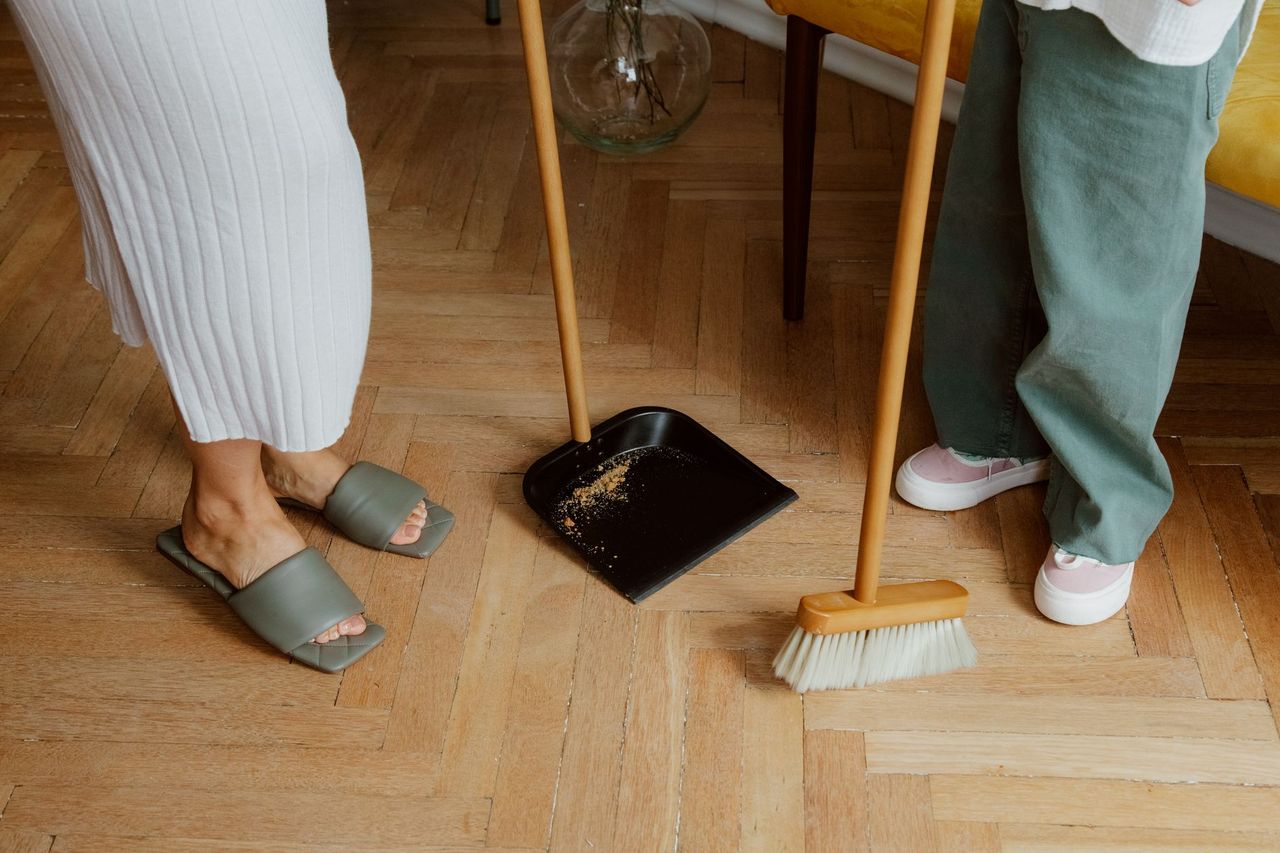
Start with a small number of fixed chores. Separate daily responsibilities, weekly responsibilities and occasional contributions so the child can see what is expected without carrying an endless list. A daily task might be putting away personal items. A weekly task might be resetting a shared room. An occasional task might be helping prepare for guests or sorting a drawer.
Write instructions that another adult could understand without explanation. Include what must be done, when it happens, which materials are allowed and what a finished result looks like. “Clean the bathroom” is broad. “Wipe the sink with the labelled cloth, put toiletries in the basket and tell an adult if the floor needs cleaning” is observable and safer.
A neutral reminder can be brief: “Please check your evening list.” Build in a predictable time for checking rather than commenting throughout the task. If homework, illness or family demands change the day, adjust the plan openly. A routine that can bend is more useful than a strict system that regularly creates conflict. A weekly chore schedule can help turn separate tasks into a manageable rhythm.
- Choose responsibilities that fit the child’s actual abilities and the home’s equipment.
- Keep daily chores short enough to complete before attention is exhausted.
- Use one shared location for the checklist, materials and safety instructions.
- Review the system periodically instead of changing expectations in the middle of a difficult moment.
- Treat reporting a broken, missing or unsafe item as responsible behaviour.
Prepare for teenage responsibilities
Before adolescence, children can practise the skills that make later independence safer: anticipating what is needed, following several steps, returning materials, checking the result and speaking up when a problem appears. These skills matter more than simply adding heavier or more complicated chores.
Support should fade gradually. Move from demonstration to a checklist, then from a checklist to a reminder, and finally to an occasional review. Keep adult control over tasks involving strong cleaning products, significant heat, sharp blades, power tools, dangerous machinery, unsafe heights or situations where a mistake could cause serious harm. The child’s confidence should never be the only safety check.
When a 12-year-old manages basic responsibilities reliably and follows safety instructions, you can begin discussing the next level of household contribution. The guide to chores for teenagers aged 13 and up can help you plan that transition without expecting complete independence overnight.
Key takeaways
- For ages 8 to 9, begin with visible, familiar tasks such as folding clothes, packing a bag or wiping a small surface.
- For ages 10 to 12, gradually include preparation, cleanup and responsibility for a complete simple routine.
- Match the chore to ability, attention and household safety rather than relying on age alone.
- Use demonstrations, checklists and final reviews before moving to lighter reminders.
- Keep dangerous products, significant heat, sharp tools and unsafe heights under adult control or suitable supervision.
For tonight, choose one personal chore and one family contribution. Write the exact steps, show the child the expected result and agree on when you will check it. That small, repeatable arrangement is enough to begin building responsibility without asking a tween to function like an adult.
Frequently asked questions
What chores can an 8-year-old do?
An 8-year-old can often manage tasks such as putting away personal belongings, folding towels or simple clothing, packing a school bag, unloading safe dishwasher items, feeding a pet with an agreed portion and wiping a small surface. Demonstrate the task first, use clear steps and complete a light final check.
What household tasks are suitable for children aged 10 to 12?
Children aged 10 to 12 may be ready for broader responsibilities such as preparing part of a cold meal, sorting everyday laundry, emptying a suitable bin, resetting a shared room, sweeping a defined area or managing a simple laundry routine. The child should know which materials and equipment are approved and when to ask for help.
Should a tween be allowed to do a chore alone?
A tween can work alone when the task is familiar, the equipment is safe and the child follows the agreed steps reliably. Begin with a demonstration and nearby support, then move to a brief reminder and final check. Do not leave the child alone with strong products, significant heat, sharp tools, dangerous machinery or unsafe heights.
How can responsibilities increase without constant monitoring?
Transfer one part of the process at a time. Start by demonstrating, then use a checklist, then reduce reminders while keeping an occasional review. Ask the child to collect materials, complete the task, put equipment away and report problems. This gives responsibility a clear boundary without requiring an adult to supervise every movement.
Which household tasks are best avoided before adolescence?
Avoid assigning unsupervised tasks involving strong cleaning chemicals, high heat, sharp blades, power tools, dangerous machinery, unsafe heights or heavy equipment that the child cannot control safely. The decision depends on the individual child and the home environment, but safety limits should always take priority over convenience.
How many chores should a child aged 8 to 12 have?
There is no single correct number. Start with a small set the child can complete consistently: usually one personal responsibility and one household contribution is enough to establish a routine. Add another task only when the existing expectations fit comfortably with school, rest and family life.