At 12, most children know how to do a household chore when asked, but still struggle to spot on their own when it's time to act. So it helps to choose a chore where the need is obvious, like a full trash can or a machine to empty, and to adapt the cues to the child: some will respond to a visual or sound signal, others will prefer a checklist or a written reminder.
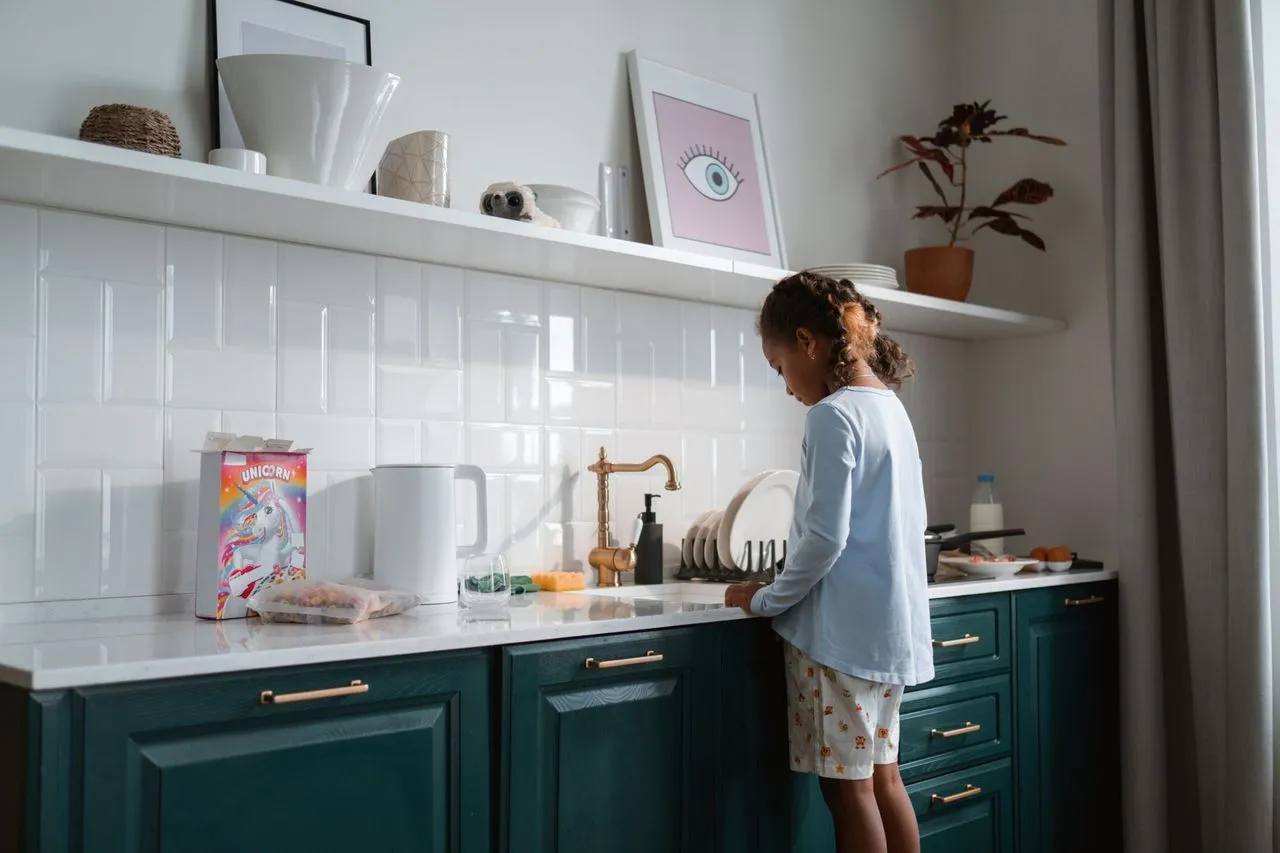
For example, Inès empties the dishwasher without any trouble when asked, but won't think of doing it as long as nobody points it out. That shows the difference between knowing how to do a chore on request and taking the initiative to do it unprompted. To support independence, it's best to stay close for the risky steps, limit the cleaning products within reach and check at a set time rather than piling up reminders.
At 12, the next step: noticing on their own
Take stock of where your child is with that same chore:
- They do the chore with you: they empty the machine while you stand nearby and tell them where the mixing bowls go.
- They do the chore alone, when asked: they empty all of it when you tell them to, and you check afterward.
- They do the chore alone, without being asked: they see the machine has finished and empty it before you think of it.
At 12, most children reach the second stage. What they still have to learn is spotting the right moment to act by themselves. Unlike a simple move like putting a glass away, this ability can't be taught directly, which explains why it takes longer to come. (Bourdon, 2025)
How do you know they've reached this stage?
There's no set timeline: every child moves at their own pace. But some signs don't lie: the day they empty the dishwasher without you having to check, or when they tell you the dishwasher pods are running out, that's a good sign.
The guide on teaching kids responsibility explains how to remind one chore at a time and why it often works better to tie a chore to a moment in the day rather than to a set time. (Encourager l'autonomie sans mettre en danger, 2026)
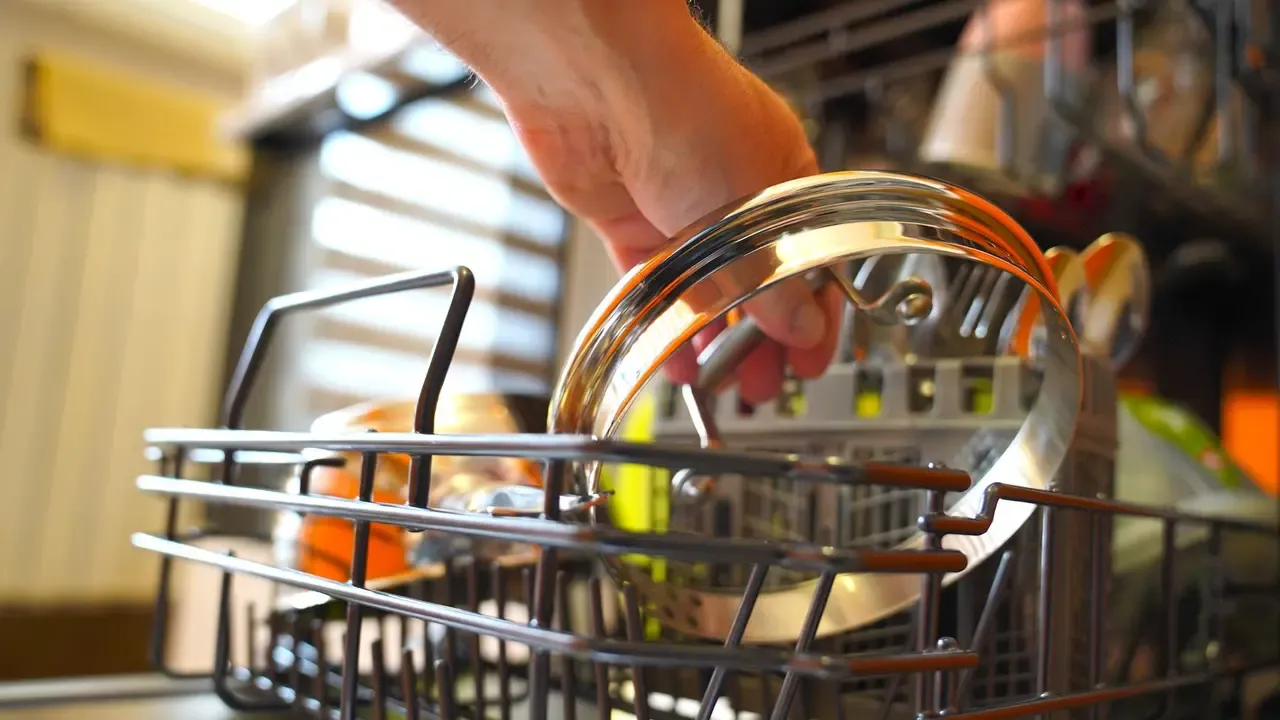
Choose a chore where the need is visibly obvious
Start by choosing a chore where the need is obvious to your child, not just to the adults. An overflowing trash can, a full laundry basket or an empty food bowl are clear signs they'll notice. On the other hand, “cleaning the bathroom” is a need only the adult sees, because they're the one running the house. For chores like that, set a specific day, like Saturday morning, to build the habit.
Next, spot what causes trouble in your home day to day. Is the dishwasher still full in the morning? Start there. If the entryway is cluttered with shoes in the evening, ask them to tidy that space before dinner. To make the learning stick, spell out the expected result in simple, concrete terms that are easy to check at a glance: “sink emptied and counter wiped after dinner” is clear, while “help in the kitchen” is too vague. This steers the child toward a precise, observable goal. A responsibility chart can also help you pin down these expectations, depending on the case.
Chore chart for 12-year-olds
Here are chores a 12-year-old can carry from start to finish. For each one, the third column gives the signal that tells them it needs doing without you, and the last one says where you stay involved. No visible signal? A day set in advance does the job, like Saturday morning for the sink and mirror.
| Chore | Start to finish | The signal | Your role |
|---|---|---|---|
| Empty the dishwasher | Take the dishes out, put them away, check for silverware at the bottom of the rack | The machine has finished its cycle | None, after the first few times |
| Do a load of laundry | Sort, measure detergent, start the machine, hang to dry or move to the dryer, fold, put away | The basket is full | Check the setting and the amount the first few times |
| Take out the trash | Tie the bag, take it out, put in a new one | The bag is full, or it's the night before pickup | None |
| Feed the dog / cat | Fill the food and water bowls, close the food bag | The bowl is empty in the morning | Take over when they sleep somewhere else |
| Pack their bag | Read the next day's schedule, get supplies and clothes ready | Every school night, before screen time | None |
| Tidy the entryway | Shoes put away, coats hung up, bags in their spot | Before dinner | None |
| Clean the sink and mirror | Clear the counter, clean with the chosen product, put the supplies away | Saturday morning | Pick the only product allowed and show them the first few times |
| Make a simple meal | Read the recipe, prep the ingredients, wipe the counter | One set evening a week | Keep the stovetop, oven and knives |
Where to stay close
Stovetops, the oven, very hot water, knives and step stools still call for you to be there at 12. Age alone isn't enough to know whether your child can use them on their own. Your equipment matters too. (Bourdon, 2025) It's up to you to decide in your kitchen: set the limit before you start, not halfway through the recipe.
For cleaning products, keep it simple: a single product, chosen and stored separately by you, is enough. Show them which one to use at first. The other products stay out of reach. If they're unsure about a bottle, they should come and ask you before using it. (Les tâches ménagères, une activité à partager en famille, 2022)
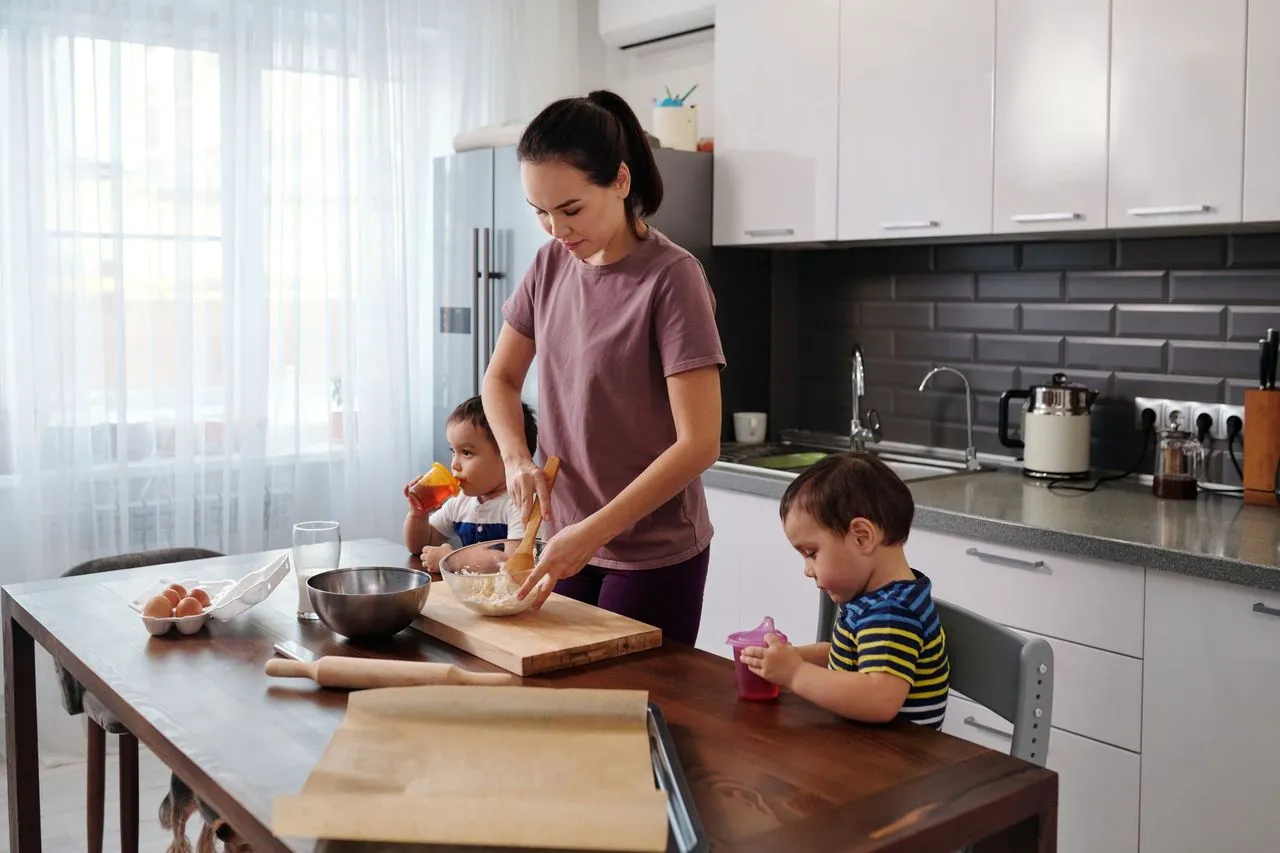
You can also separate household chores from dangerous moves, which helps the child become independent without putting them at risk. For example, when Inès makes a meal, she reads the recipe, gets the ingredients out, washes the vegetables, sets the table and wipes the counter at the end. But handling the knife and watching the pan, which are riskier because of the heat or the sharp objects, stay the adult's responsibility. This setup lets the child understand the whole process while staying safe during the difficult steps. That way, Inès gradually learns to cook and to be responsible within a framework suited to her age.
Check once, at a set time
Once you've handed over the chore, stop reminding and choose a single moment to check, for example at 8 a.m. before you leave. A quick walk through the kitchen to see the state of the machine is enough. The child does the chore at their own pace, often after a meal or when they get home from school, and the time you chose is only for your check. Tell them if the chore is done or, if something was missed (“the knives are still in the rack”), let them fix it themselves.
At first, check every day. A chore done well counts, even if it isn't in the order you'd like. Choose a benchmark, like two weeks without a reminder: then space out the checks (every other day, then only on Saturdays). This rhythm isn't a strict rule: it keeps you from doing things at random when you're tired. If your schedule changes often or your hours vary from week to week, adapt the time of the check to whatever suits you. You can choose a time window rather than an exact time, or check when the whole family is home. If a step is often forgotten, that may show the chore is too hard for the child for now. In that case, it's better to simplify it by removing or breaking down the complex steps rather than giving lots of reminders.
For a digital check, the Harmonia app offers simple tracking: your child checks off the chore in their space, and you approve it at the chosen time, with no reminders in between. The Habits screen lets you see progress and spot the chores to work on. It's up to you to decide which ones to simplify next. The app is free for one parent and one child. (Harmonia: tâches & récompenses, 2023)
After 12: one change at a time
When a chore has been done well for several weeks, change only one thing at a time. Everything else stays the same. For example, Inès has been emptying the dishwasher for a month without a reminder: she can now load it after dinner and start it. Or she keeps her room tidy, and you hand her the entryway, which the whole family uses. If you add a step, a room and a new time on the same day and it stalls, it's hard to know what the problem is.
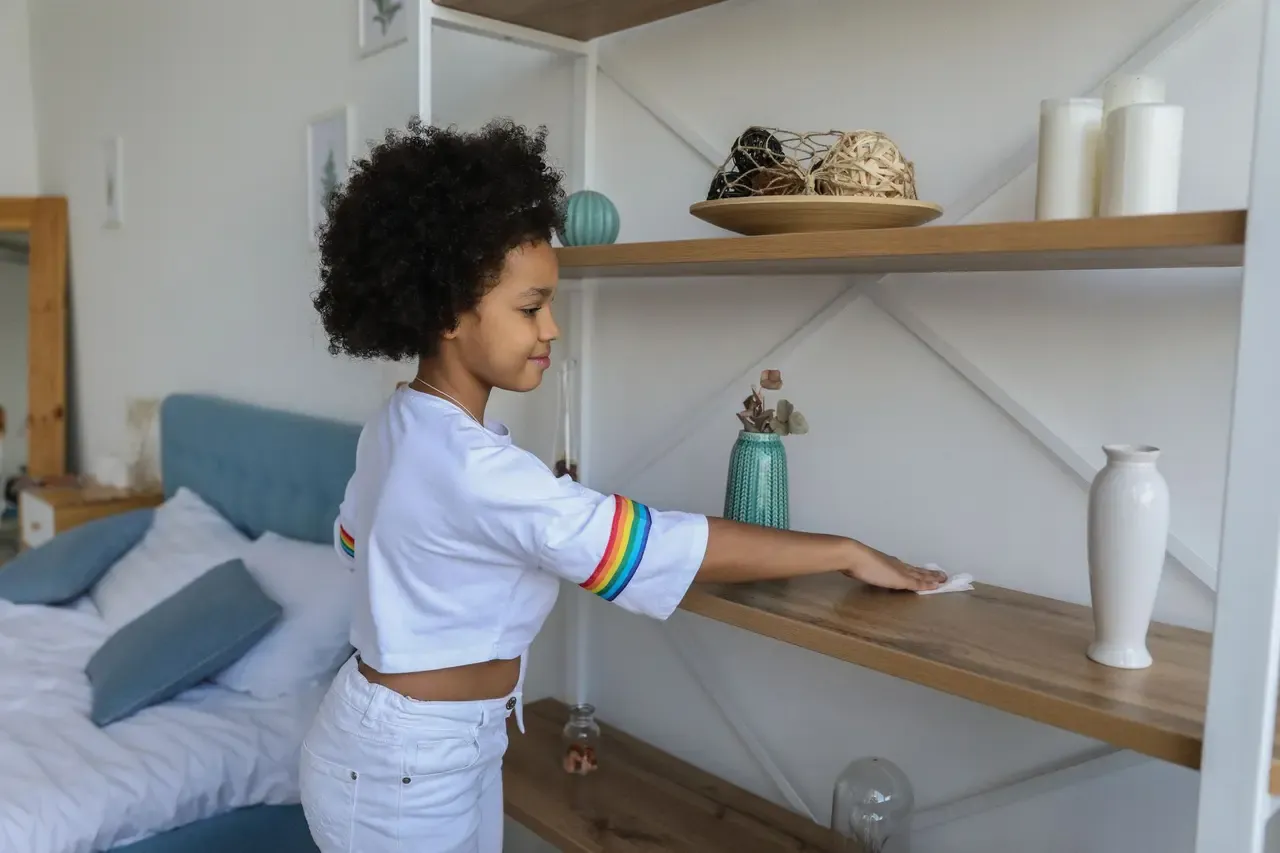
Remember to keep time for homework, activities, friends and rest. Plan some evenings with no chores too. To boost motivation, let them choose the next chore to add or the order they prefer to do them in. Some successes deserve recognition: celebrate progress, even small, with a word of encouragement, a sticker on a chart or a moment together. If every success brings a new task, they may get discouraged and lose motivation. The chore chart by age helps place expectations at 12, between the 9 to 11 bracket and teenagers 13 and up. Look at it before adding a new chore, so you move forward step by step. (Bourdon, 2025)
Key takeaways for tonight
- Choose a chore where the need shows: trash, dishwasher, pet bowl.
- Write the expected result in one sentence they can check at a glance.
- Set the time you'll check, and don't remind them before then.
References
- Pailhé, A. & Solaz, A. (2024). « Je mets la table tous les jours » : la participation des enfants de 10 ans aux tâches domestiques. Population & Sociétés. https://doi.org/10.3917/popsoc.628.0001
- Bourdon, C. (2025). Les tâches du quotidien adaptées à chaque âge : que confier à son enfant ?. Allo Psychologue. https://www.baguelecallo-psychologue.fr/taches-quotidien-adaptees-age-enfant-confier/
- KidsCare France (2026). Encourager l’autonomie sans mettre en danger. KidsCare France. https://kidscare.fr/guide-parent/encourager-lautonomie-sans-mettre-en-danger/
Frequently asked questions
What chores can a 12-year-old do?
Chores they can carry through to the end and where the need is visible: emptying the dishwasher, doing a load of laundry all the way to putting it away, taking out the trash, feeding the pet, packing their bag, tidying the entryway. Stovetops, the oven and knives still call for you nearby, at least for the risky step. For cleaning, stick to a single product.
Can a 12-year-old cook alone?
Something with no stovetop, no oven and no knife, yes, once they've made it with you. As soon as there's heat or a blade, stay in the kitchen for that step and leave them everything else.
Do you still need to remind a 12-year-old about chores?
For the first weeks of a new chore, yes, and again after a change in routine like going back to school. After that, the reminder can come from somewhere other than your voice: a full trash bag, the light on a machine, an alarm they set themselves on their phone.
Should you pay a 12-year-old for chores?
No financial reward for everyday chores: they're part of family life. If you want to pay for an effort, keep it for out-of-the-ordinary jobs, like washing the car, and set the amount in advance.